Friday, May 17, 2013

Ready to Inaugurate

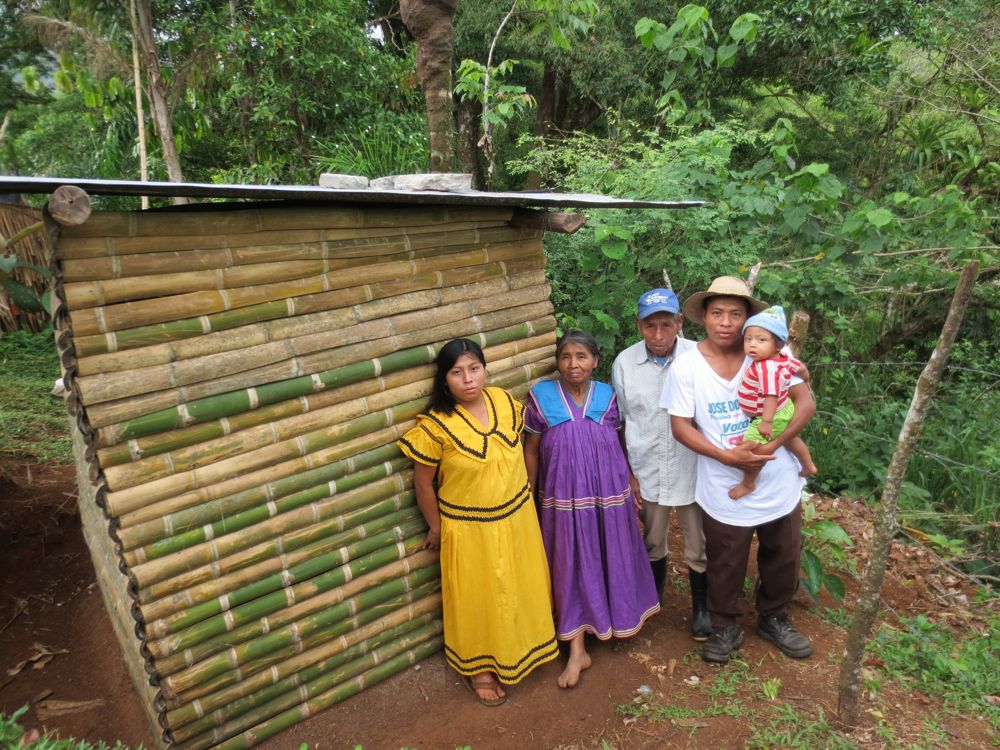
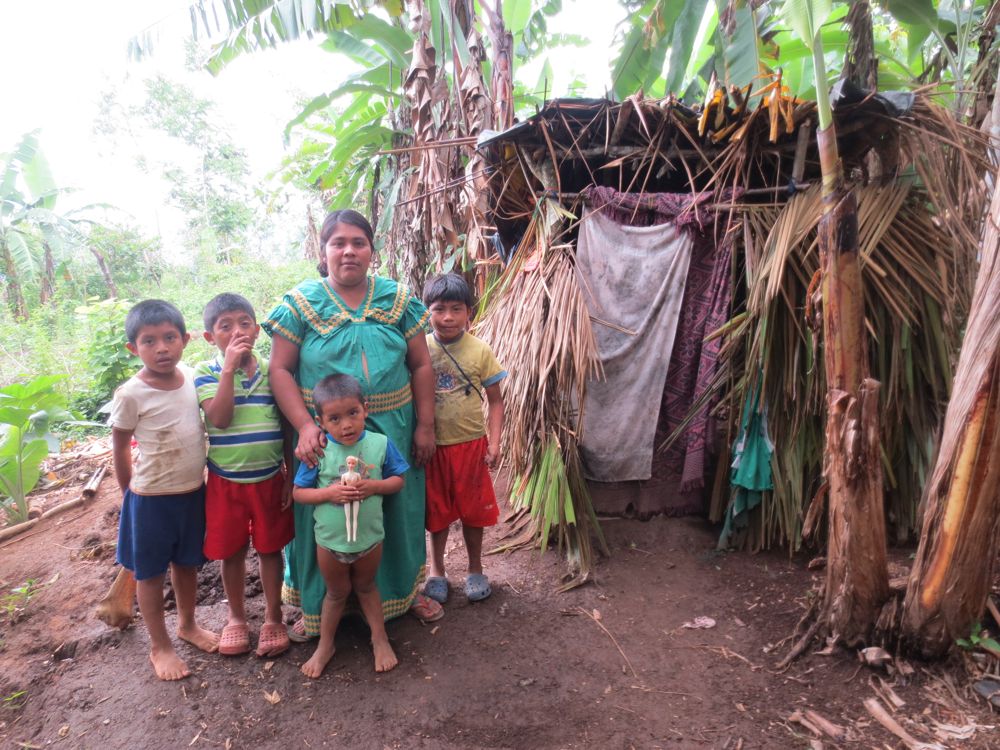
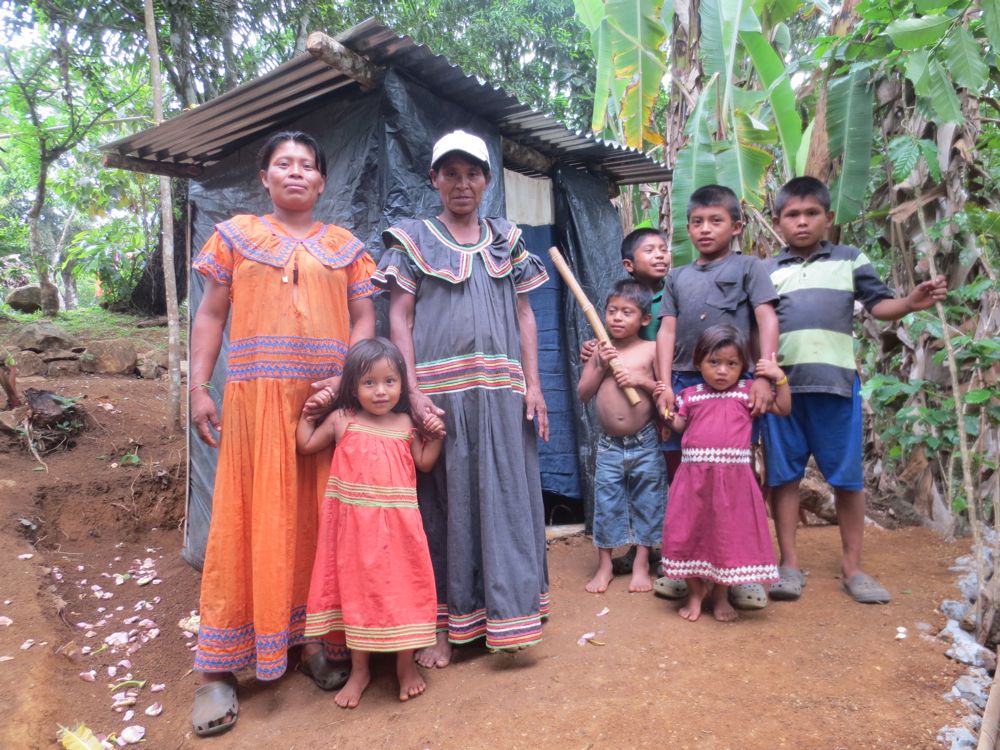
We've completed the concrete work for 70 latrines- more than originally planned for. This month people are constructing their outhouses and we'll hold an inauguration celebration on Saturday, June 1 with a chicken dinner, skits, games, and presentations. Thank you for all your support!  Here are some photos of the first finished latrines, built in a wide variety of styles. You can see the pride of the families in the work we've done together, in each picture. For more photos, click here.

Jedigo and family

Humberto and family

Beki and family

Emiliano, Cecelia and family

Luis and family

Trina and family

the Guary Baptist Church

Rosalina and family

Hilaria and family

Beni, Federico and family (my neighbors)

Mikaela, her mother Cheya, and family

Rufina and family

Bella, Moises, family, and turkey

Thursday, March 21, 2013

More and more latrines!

Hello friends! We are well underway on pit latrine construction. We've made 41 out of 66 latrines- the concrete base and the seat- in about 3 weeks. People have been putting in a lot of work! Soon they will begin to construct their outhouses. Several other Peace Corps volunteers have come out to help for a few days of work- I thank them for that! In all, the work has been advancing more rapidly than I'd expected. We want to get much of the work in before the dry season ends in April.


The slab is cast beside the hole and will be located on the hole a week or more later.
Writing "Cuerpo de Paz,"  which means Peace Corps, on the finished slab

The participants are divided into several work groups that advance semi-independently. In some work groups, the men work on making the concrete floor slab and the women focus on the patient, fine task of making the seat. The concrete latrine seat or commode is made on-site using a technique called "ferrocement". The seat is sculpted with mortar and chickenwire on top of a mold: a cloth bag filled with sawdust or rice husks. It's a little tricky but in every work team there are several people that've truly gotten the hang of it. The technology is very replicable and accessible, and teaches new skills and confidence while saving money, compared with a manufactured seat bought from the hardware store.

preparing the formwork
plastering with concrete
Moises plasters the seat
 
This seat is nearly finished: putting the finishing touches on the inside before mortaring it to the slab.
 In Ngäbe culture, certain tasks are "men's work" and others are "women's work." Men cut and burn fields to prepare for planting, do heavy work and house construction, and make woven hats. Women wash laundry, cook, care for children, and make clothing and crocheted bags. Both genders share in planting the fields, weeding and harvesting the crops. It's interesting that even in the new task of making the latrines, the groups have decided what is men's and women's work. The latrine seat requires patience and attention to detail, similar to making handicrafts. I'm glad that the women are finding the confidence to work on a construction project!


Another feature of Ngäbe society is that work is very communal. Friends and extended families traditionally work together on agriculture, and we've adapted that idea for working with latrines. The ideal outcome of the project will be when the newly trained households share their experience with neighbors to encourage more people to make latrines.


Wednesday, February 20, 2013

Huecos

Tomorrow (February 20) is an important day for us here in my little village. The building-supply store will be bringing in materials for our latrine project on their trucks. We will be making 64 concrete latrines for families, plus one for the community meeting-house and one at a church. Due to the generous support of many, the project is becoming a reality.  I am focusing entirely on this project for the months of March and April, and we hope to be completely done by the end of May.

All this month people have been working on digging pits. The clay soil doesn't have a lot of nutrition for growing crops but it's great for making pits- most people have made latrine pits between 2 and 3 meters deep (10 feet). That's really deep. Just about everyone has their pit done, due to great work by the organizing committee while I've been absent for much of the month of January. There's some potty humor in talking about latrine pits, or "huecos" in Spanish : "I'm here to see your hole."  That causes giggles for sure.

In January both my boyfriend Ken and my parents made visits to Panama! The visits were a very special time and there's a lot more to say, but these pictures will suffice for now. You can see more recent pictures by following the link to my Picasa account on the right hand side of the page.

I am also looking forward to my 30th birthday on February 24th, a milestone for sure! Mom and Dad brought me some packages of balloons, though I'm not sure what I'll be doing on the day itself. At least, as a Sunday, I have the day off from making latrines. Mechi, meanwhile, is looking forward to her first birthday next month, however I don't know that the cat has a lot of potential for future growth and development. May I, you, and the people of my Panamanian community grow in many ways this year!

Ken, I, and Mechi
My neighbor Beni tries on Ken's winter clothes: good for some laughs

friends from church and my parents

I and my parents, Clare and Sharon M.

I, Mom, Dad, and my neighbors Federico and Beni's family in front of my house.

Mom sucks the juice out of an orange, Panamanian-style, with young friend Bei


Wednesday, December 26, 2012

Feliz Navidad y un Prospero Año Nuevo!


Here's how I imagine the Nativity scene occurring in my area of Panama, with the Ngäbe people. A palm thatched hut shelters Mary and Joseph, who rock baby Jesus to sleep in a chackara or traditional bag. A clear summer's night shines with millions of stars; banana leaves rustle and cicadas call in the background.  A host of skyborne angels summons people- old ones, new ones, children- to see the newborn king.  He was born 2000 years ago and in a far country, but he has come for all peoples and all times.


It's not just about Christmas here: There's 3 important Panamanian holidays in quick succession. Mother's Day is celebrated on December 8th and is a big holiday on the level of Thanksgiving in the States. Christmas and New Year's as well. Each holiday is celebrated with the family, often involving a large meal and killing a homegrown chicken, if you're lucky enough to have one. In that tradition, my local church has been gathering together for a meal to mark each event. Children shoot off fireworks - usually just the kind that make a big bang and some smoke. For Christmas, there's often a piñata for the kids (I made two of them for celebrations in the community).  Some men also drink heavily, into a stupor, on each of the days.  Ken is coming for December 31st. Kids are already starting to make "Old man" scarecrows or "Viejos", representing the passing of the old year, that they'll explode with fireworks on New Year's Eve.
Youth sing a song for the mothers on Mother's Day in church
Women at church prepare a meal


December 1st, World Aids Day, was marked by a series of educational events about HIV and AIDS.  I helped out with several talks in nearby communities organized by volunteer Laura G and attended a march on December 1st in San Felix with high school students and the Ministry of Health. I also gave an HIV awareness talk for 5th and 6th graders in my own school.  HIV is growing in the Comarca (Indian reservation), with an estimated 2000 HIV positive individuals in a population of 155,000 (1%).  Families are often split up when men leave to work in coffee and vegetable harvests for several months of the year, and some seek other partners during that time. While many people have multiple sexual partners, few use condoms, and in some places with remote access they are not easily available.  However there is a dedicated clinic run by the Ministry of Health to combat HIV and provide the latest medicines to HIV positive individuals.  Schools and health centers are increasingly making efforts to educate people about the epidemic, but there's a long way to go to reach good awareness and healthy sexual behavior. Peace Corps Panama has developed a series of learning games and activities that make learning about HIV entertaining and memorable. For me, while I don't think I could develop my own original lesson plans about sex education, I can use these materials, and it's satisfying to feel that I'm giving people information that could make a real difference in their lives. 

Students loft a red ribbon banner as part of the HIV awareness march


Laura G. leads activity "Attack of the Virus"

Health worker works with women to draw and name fluids of the body- identifying which ones carry the HIV virus


It's the start of the dry season and the crops that have come into season are cacao (chocolate), oranges, papaya, and okra. Yum!  Mature okra seeds are toasted and milled to create a coffee-like drink. Cacao is toasted and milled and mixed with water to create the traditional drink enjoyed by Central Americans from ancient times. Some families still have rice they harvested in October and November, and corn.  Soon we'll be enjoying guandú (pigeon peas) a delicious pea, often cooked with rice. 


Grinding chocolate on a traditional millstone

Friday, December 14, 2012

Muchisimas gracias

A great many thanks for your donations to the latrine project. My fundraising goal has been reached in a shorter time than I expected (less than two weeks)!  The next steps are to meet with the organizing committee here, and to get people to dig their latrine holes by a target date. I've been visiting the enrolled families to discuss latrine location and other details.  I hope to organize delivery of materials for February, after some events I'm really looking forward to: Ken comes for a visit at the beginning of January and Mom and Dad at the end of January!

While I cannot accept donations for this project beyond the goal, I will certainly update you if I work on other efforts that need financial support in the future.  If you were considering donating but weren't able to, other Peace Corps volunteers in Panama are working on similar projects to improve rural water and sanitation systems, and I may be able to inform you when they are fund-raising.

Friday, November 30, 2012

Thanksgiving


Thanksgiving dinner


My latrine-building project is now ready to receive donations of any size, to partner with my community in construction of 65 pit latrines. A $50 donation covers the cost of one latrine. Click here to see the project description on the Peace Corps website and donate online, if you like. At the website on the right hand side, you can see how much has been donated to date and how much remains. I hope that we will be able to begin construction in February, the dry season, depending on how the funds come in.

vine-covered old growth tree
I enjoyed Thanksgiving with 160 other Peace Corps Panama volunteers at a lodge in the western rainforest. It was at a relatively high altitude and was cloudy and drizzly for the entire 2 1/2 days I was there (the area is also called the "cloud-forest"). I thought of a lot of rainy, cool Thanksgivings celebrated at home. Despite the rain it wasn't too cold, and I got to get out and hike with some other Volunteers on trails in the park near the resort.  We crossed cold streams (don't fall in please!) and saw old-growth trees or "milenios".  Magnificent hummingbirds flocked to sugar-water feeders set out by lodge staff. We enjoyed turkey, mashed potatoes, green beans, and pumpkin cake which we prepared ourselves in the lodge's industrial kitchen. The area, Cerro Punta or "Point Hill" is well known for producing vegetables such as potatoes, tomatoes, cabbage, lettuce, and celery which grow well in the relatively cool climate. They even grow strawberries- I sampled a few.

This sign says the park gets 5 m of rainfall annually!
A large tree and I
This stream was a challenge to cross to get to our desired trail. Seneca is a volunteer in a community near mine.

On another note, Volunteer Jack F. has updated the Wikipedia page on the Ngäbe people with lots of interesting information the culture of the people I live and work with. Click here to take a look.

Tuesday, November 13, 2012

"Bron!" or Let's Go!

I have an announcement: I am organizing the construction of simple latrines to improve the health of the community in which I live and work, and I'm seeking financial support. This isn't a surprise to you if you've been following my blog here :) but I'd like to share the following statement with you, which summarizes the nature of the project.


Community analysis meeting
In the foothills of the mountains of the Ngäbe-Bugle indigenous reservation in western Panama, the neighboring communities of Guary and Alto Nube are home to nearly 500 subsistence farmers who cultivate staple crops such as rice, corn, yucca, and fruit on the steep, eroded hillsides of their homeland. They proudly maintain traditions such as cultural dress and handicrafts, and they speak their native language. I have had the privilage of living and working here in this particular community with the Ngäbe people over the last year, and in my next year here, until October 2013, will be working on health education, on improving management of existing water systems, and on improving sanitation practices. It is on the account of sanitation that I write to you today, which I expect will be my greatest effort during my 2 year service.


In Alto Nube and Guary, 72% of homes lack basic sanitation infrastructure and families defecate in the woods, fields, and creeks near their homes. This exposes people to feces, leading to high rates of diarrhea and intestinal worms.  Intestinal worms, nearly universally prevalent, also contribute to children’s malnutrition as they consume precious food. Regular medical campaigns have trained most residents in the use of pit latrines, but only 23 wooden or concrete latrines exist in 77 houses.  Health is a priority for families, as expressed in interviews, conversation, and observation, but it seems there's not a clear understanding of what steps may be taken to arrive at better health.
Some of the kids whose families plan on participating in the project


Since the community repeatedly expressed interest in building latrines as a group, I have been coordinating a project that aims to teach basic hygiene practices, hand in hand with with construction and maintenance of affordable, durable pit latrines. I invited families to a series of health workshops, focusing on prevention of gastrointestinal illnesses and on latrine construction. The 65 families that participated in the workshops are eligible to build latrines as part of the program.  The families will learn how to build small concrete slabs and seats. These latrine components can be moved to new locations as needed and are expected to last at least 20 years. The families will build outhouses of local materials, and may opt to contribute to buy a metal roof. Participants will be encouraged to model proper latrine usage and to use their new construction skills to teach their neighbors to build their own latrines. The volunteer committee that is organizing the program with me is learning valuable project management skills. This program is an effort to accelerate a slow but existing trend towards more latrine usage, and give children an opportunity to grow up with latrines, in such a way that they won’t return to the traditional, unhealthy ways of using the fields. The following are a few photos from the health and hygiene workshops:


Participants in a skit

Teaching about hygiene
A mock-up of latrine formwork
I am organizing the project using the guidelines of the Peace Corps Partnership Program, in which donations are sought in order to support the Panamanian community in reaching its goals.  Community members will provide local materials and labor, and the local Panamanian government will be providing transportation of materials from the hardware store. The community members' and the local government's contribution are a full 50% of the cost of the project. I am seeking donations to cover the other 50% of the cost, which comes to $3099 and will be used to purchase latrine construction materials and subsidize metal roofing for the outhouses.  I invite you to sponsor one or more latrines at $50 each (contributions of any size are welcome).

Tax-deductible donations can be made through the Peace Corps' website here. I am hoping that we will have funds available to begin construction in February, Panama's dry season. I always appreciate your thoughts and prayers for the work here.