|
| A skit: a happy family in their "house" (of raised arms) with a new latrine |
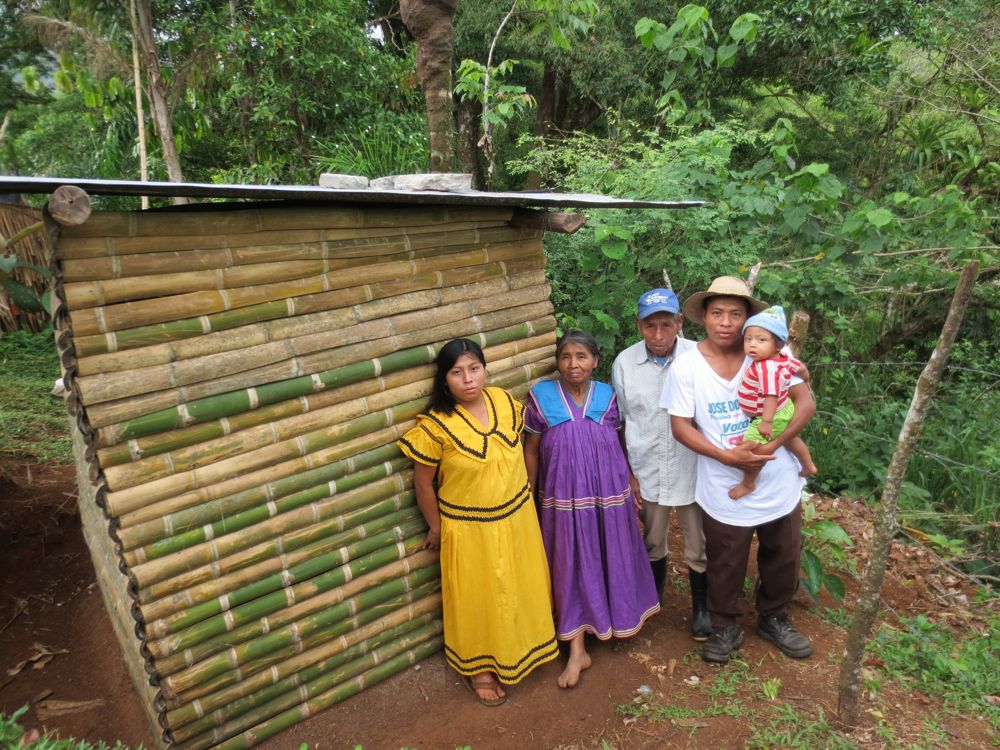
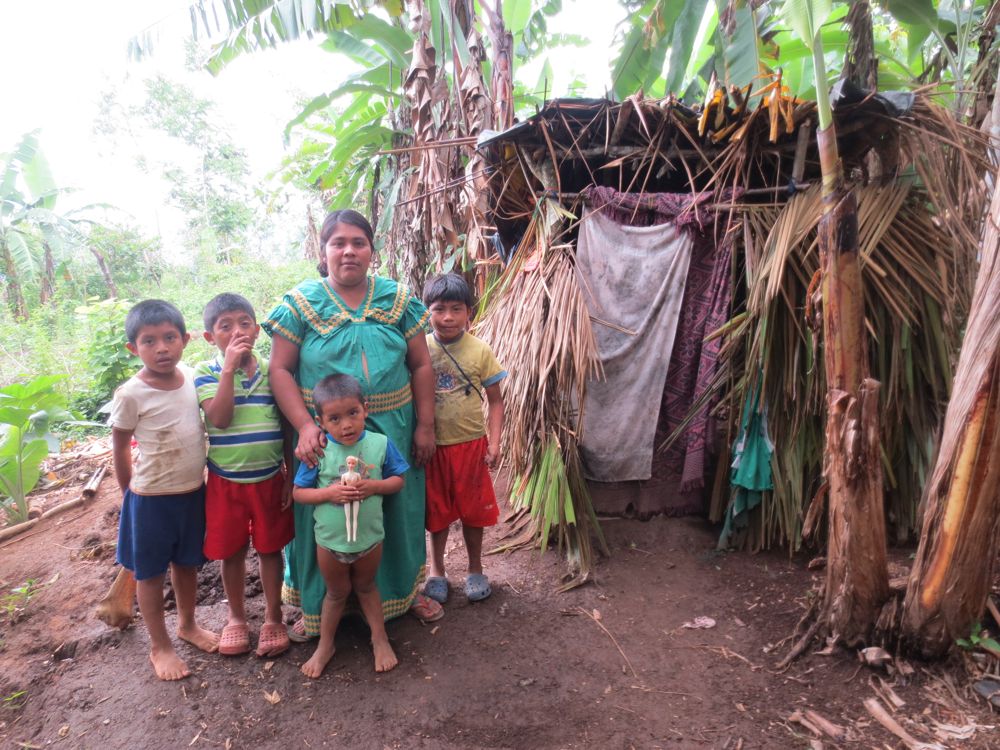
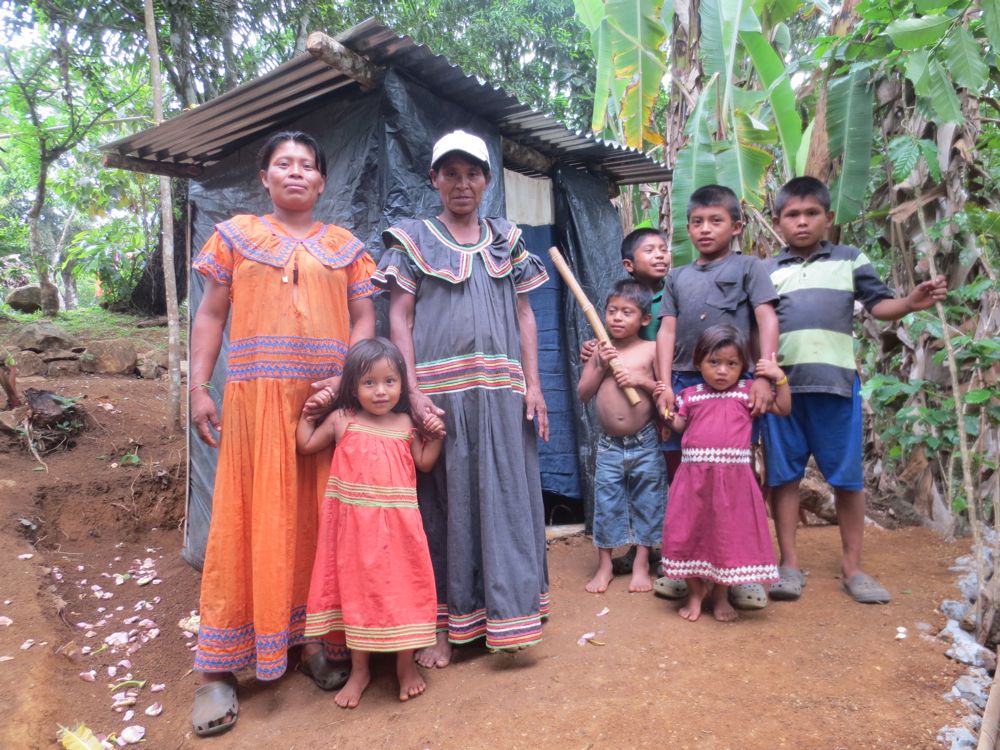
On June 1st, we celebrated the completion of the latrine project with about 500 community members. Together, we've built 70 pit latrines! (Unfortunately one of those got buried in a small landslide from the steep slope above; we're considering how to replace it.) The project is now done ; this month one of my remaining tasks is to visit each family, check in on their latrine (are they using it? Is the seat covered? Do they have a convenient place to wash hands? Does the family have concerns or questions? ) and also take a photo of the family next to the latrine.
 |
| Princely brothers Nicolas "Responsibility" Flores and Norberto Flores |
On our big celebration day, all families participating in the program were invited. Organizing the party was a big endeavor, but members of the latrine committee took on most of the burden. Several days before the event, we gathered to chop firewood and erect a tarp shelter (our first tarp collapsed in heavy rain before we finished putting it up, but happily the second attempt was more successful). That same day, Ken arrived for his third visit to Panama. On the eve of the party, women marinated 120 pounds of chicken which would accompany 200 pounds of rice. They also prepared 100 gallons of "chicha," a traditional drink made from corn and sugar.
 |
| Tito, Ken, and Mikaela |
On the big day, the highlights were presentations by each of four different work groups (families that had worked together on construction, organized by a member of the latrine committee.) Each group presented a flag with slogans about health and community values, along with choreographed songs and dances.
 |
| traditional "jegi" dance |
One group presented a skit about the advantages of latrine use (compared with going in the bushes) and used as a prop a toy model latrine that they'd constructed in the same manner as the real deal.
 |
| Model latrine. They're saying "Oh, it's so heavy! I can't carry it!" (in jest) |
A father and son sang a song in my honor, about "Begui, the beautiful woman who works hard."

There were also games such as eating an apple which was hanging on a string. The best ideas came from the community members: they really took it and ran with it. I felt so proud and glad that others were there to witness the day. The local officials were all present, who had donated food for the event. It was a day to celebrate, as one group's flag said, both Tradition and Progress.
 |
"Sanitation, Tradition, and Progress."
|
 |
| Group flag captions: "Taking care of the Environment: Health, Responsibility, Friendship, and Punctuality." |
 |
| The flag says: "Caring for the Health of our Children. Friendship, Cooperation, Responsibility." |
And in more general terms that's precisely where the Ngabe tribe seems to be: considering what they will keep from the traditions of the past while embracing the opportunities of the modern world. In the most broad terms, I hope my presence here, and that of the other Peace Corps Volunteers in this region, empowers present leaders and children, the leaders of the future, to navigate the difficult choices between Tradition and Progress to better the health and opportunities of the Ngabe people. That's a big goal: and I think that building latrines here, with your support, is one possible step towards that end, both for the experience that locals gain in project management and for the health benefits that latrines can bring. Thank you.
 |
| More traditional dancing! |
 |
| Presenting certificates of appreciation to project coordinators |
In other news, my boyfriend Ken and I enjoyed his nearly 2 week trip here: we went out to Bocas del Toro province on the Carribean side of Panama. One area of Bocas, Isla Colon, is a huge tourist center and we spent a few days there enjoying restaurants and beaches.

We also got to get off the beaten track: There's indigenous people too, in the same tribe, but some parts of the culture and cusine are very different because they live closer to the sea. We visited friend and Peace Corps colleague Patricia in a
village where she's working on similar water and sanitation issues to
what I'm working on. The village is on a small Carribean island and is
accessed through a dock hidden deep in mangroves.
 |
| One dock for the town- complete with a government-project sidewalk |
 |
| Houses in this area are typically built on stilts (in my area, none are- usually dirt floors). |
 |
| Trying out a local delicacy: banana "puddin' " |
Patricia took us out for a paddle in a traditional dugout canoe, called a "cayuco" here. In the shallow waters of the bay, we saw coral and neighbors were fishing for dinner.
 |
| This boat is made from a single tree. |
Another highlight was enjoying our friend's special brownie recipe made with locally grown, organic cacao (chocolate). If you'd like to try some Bocas chocolate, look in a specialty grocery store for the
Equal Exchange Panama Dark chocolate bar- it comes from the same agricultural cooperative that many villagers belong to. On another island nearby, there's a large Black population that speaks a unique dialect of English, descendents of Jamaicans and others who moved here generations ago to work at United Fruit Co. / Chiriqui Banana, a huge employer in the region.
 |
| This mural depicts different ethnicities that form this part of Panama. And also roosters, apparently. |
Now that latrines are winding up, I'm working on organizing educational talks about HIV/AIDS in several neighboring communities during the end of July and maybe into August. It's a growing issue in the Comarca, the indigenous region where I live, and my larger community is something of a hot spot for HIV, unfortunately. These talks will probably be my last big thing to do here, my last project. We will be talking about "What is HIV/AIDS?" "How is it transmitted?" and "How can it be prevented?" I'm using some funds from Peace Corps Panama Friends' annual calendar sale to buy materials and snacks.
 |
| Condom demonstrations in a previous workshop with 9th graders at the local middle school |
I hope to receive a "follow up" volunteer in August: my replacement who'll be here working another two years in my community! We'll be here together for about a month and a half before I take off for Portland, OR in October. (During that time they'll stay with a host family, before moving into my house when I leave.) It's not entirely certain if we'll get anyone, or who they'll be, until the training process (near Panama City) is complete and they come out here.
Lots of photos are in my Picasa albums: Ken's trip is
here and the latrine photos are
here.